


This guide shows Oakville business owners how to use digital marketing to attract and retain customers. Below is a quick overview of the topics covered:

In today’s fast‑moving digital world, Oakville businesses need more than just a good product — they need smart marketing strategies to stand out. This guide breaks down proven digital marketing tactics that help businesses attract, engage and convert more customers. Ready to build a strategy that drives real growth? Let’s dive in.
Digital marketing is no longer optional. More than 60 % of marketing budgets in 2023 were dedicated to online channels, reflecting a shift in consumer behaviour. Modern customers research products, read reviews and make purchases online. Failing to meet them there can mean missed opportunities. Meanwhile, digital tools offer greater targeting, better measurement and flexibility compared with traditional advertising according to secretsushi.com. In Oakville and across the Halton Region, businesses can leverage these advantages to outperform competitors and grow sustainably.
Why Digital Marketing Matters More Than Ever for Oakville Businesses
Digital channels have overtaken traditional media
Digital marketing matters because it reaches customers where they spend their time. Over 268 million people in the United States – about 70 % of the population – shop online. Similar trends exist in Canada, with consumers researching products and comparing prices via search engines and social media before making decisions. This behaviour has pushed companies to shift budgets online, with more than 60 % of marketing spend now allocated to digital channels
Advantages of digital over traditional marketing
Compared with television, print or radio, digital marketing offers:
-
Wider reach: Businesses can target audiences across multiple platforms and devices.
-
Precise targeting: Ads can be delivered based on demographics, interests and behaviour, allowing messages to resonate with the right people.
-
Cost‑effectiveness: Pay‑per‑click (PPC) and social ads allow companies to pay only when users click or engage. This efficient spending often yields a higher return than traditional advertising.
-
Better measurement and flexibility: Real‑time analytics reveal what works and what doesn’t, enabling businesses to adjust campaigns quickly
The American Military University notes that digital marketing strategies leverage the internet and technology to connect customers with products and services, often producing better results at lower cost than traditional methods according to amu.apus.edu. Social media platforms, for example, allow businesses to run targeted campaigns and control advertising spend. This combination of reach and efficiency makes digital marketing essential for modern Oakville firms.
Oakville’s digital landscape
Oakville, part of Ontario’s Halton Region, is home to a diverse mix of small and mid‑sized businesses, from boutique shops in Kerr Village to professional services near Downtown Oakville. Residents here are digitally savvy and expect seamless online experiences. Local businesses that embrace digital marketing not only serve existing customers better but also attract visitors from neighbouring cities like Burlington and Milton. With many consumers starting their buying journey online, a strong digital presence ensures your business appears when people search for products or services in Oakville.
Top Digital Marketing Channels for Business Growth
Digital marketing is an umbrella term covering a range of channels. Here are the most effective ones for Oakville businesses:
Search Engine Optimization (SEO)
Search Engine Optimization (SEO) involves improving your website’s visibility in search engines like Google. When done well, local SEO helps your business appear when people search for “digital marketing Oakville” or “best coffee shop in Oakville.” By optimising on‑page content, building reputable links and maintaining an accurate Google Business Profile, you can attract steady organic traffic. The KEY27 property management case study illustrates this benefit. The client had lots of website visitors but few conversions; after running an SEO‑driven conversion analysis and an A/B test, their conversion rate increased from 0.96 % to 3.2 %, tripling their revenue.
Key tactics for local SEO in Oakville:
-
Claim and optimise your Google Business Profile with your address, phone and hours.
-
Collect reviews from local customers to build credibility.
-
Use location‑based keywords (e.g., “digital marketing Oakville,” “online marketing Oakville”) naturally in page titles, headings and body text.
-
Create helpful content answering questions local customers ask.
Pay‑Per‑Click (PPC) Advertising
PPC allows businesses to place ads on search engines and social platforms and pay only when someone clicks. With Google Ads, you can bid on keywords such as “digital marketing Oakville pricing” or “hire digital marketing agency Oakville.” According to research by Report Garden, digital advertisements deliver a 300 % higher return on ad spend (ROAS) than traditional media as reported by reportgarden.com. Other metrics show that average click‑through rates for Google Ads are 3.17 % on the search network and 0.46 % on the display network. This channel can bring immediate traffic and leads, making it ideal for promotions, events or new product launches.
Social Media Marketing
Platforms like Facebook, Instagram, LinkedIn and X (formerly Twitter) are vital for engaging audiences. AMU notes that businesses can set up professional accounts on each platform, tailor content to their audience and boost posts to control ad spend, says amu.apus.edu. Social media offers interactive features that allow you to build relationships, answer questions and humanise your brand. Strategic use of social media drives brand awareness and sales.
To succeed, publish relevant posts that offer value, not just promotions. For example, research suggests that Facebook posts should be 40–80 characters long and videos no more than 20 seconds. Using one or two hashtags can help your posts gain visibility without looking spammy.
Content Marketing
Content marketing involves creating blog posts, guides, videos and infographics that answer customer questions and showcase your expertise. In Oakville’s competitive marketplace, valuable content about local interests—such as “best family activities near Oakville Harbour” or “how to choose a digital marketing agency in Oakville”—can attract and retain audiences. High‑quality content not only builds trust but also boosts SEO performance by earning backlinks and keeping visitors engaged. Consistency is key; publishing informative articles and case studies (like those found on KEY27’s site) demonstrates authority.
Email Marketing
Email remains one of the highest‑ROI channels for nurturing leads and retaining customers. Because people check their inbox daily, targeted email campaigns can deliver personalised offers, announcements and educational content. A key advantage is segmentation: you can tailor messages to customer interests, purchase history or behaviour. When combined with a customer relationship management (CRM) system, email marketing fosters loyalty and drives repeat business.
Video Marketing
Short videos are a powerful way to demonstrate products, share testimonials or educate viewers. Videos appear in search results, increasing visibility. AMU notes that businesses should keep videos under 20 seconds for platforms like Facebook, ensuring they capture attention quickly. Platforms like YouTube, TikTok and Instagram Reels offer additional opportunities to reach younger demographics.
Influencer and Partner Marketing
Collaborating with local influencers or complementary businesses can extend your reach. An influencer with a strong Oakville following can introduce your brand to a new audience. Partnerships—such as joint webinars or cross‑promotions with a neighbouring store—provide mutual benefits. Careful vetting ensures the influencer’s values align with your brand.
Paid Social Campaigns
Beyond organic social media, paid campaigns allow you to reach specific demographics at scale. You can set objectives like website traffic, conversions or lead generation. With detailed targeting options—including location, age, interests and behaviours—paid social campaigns can complement your SEO and PPC efforts.
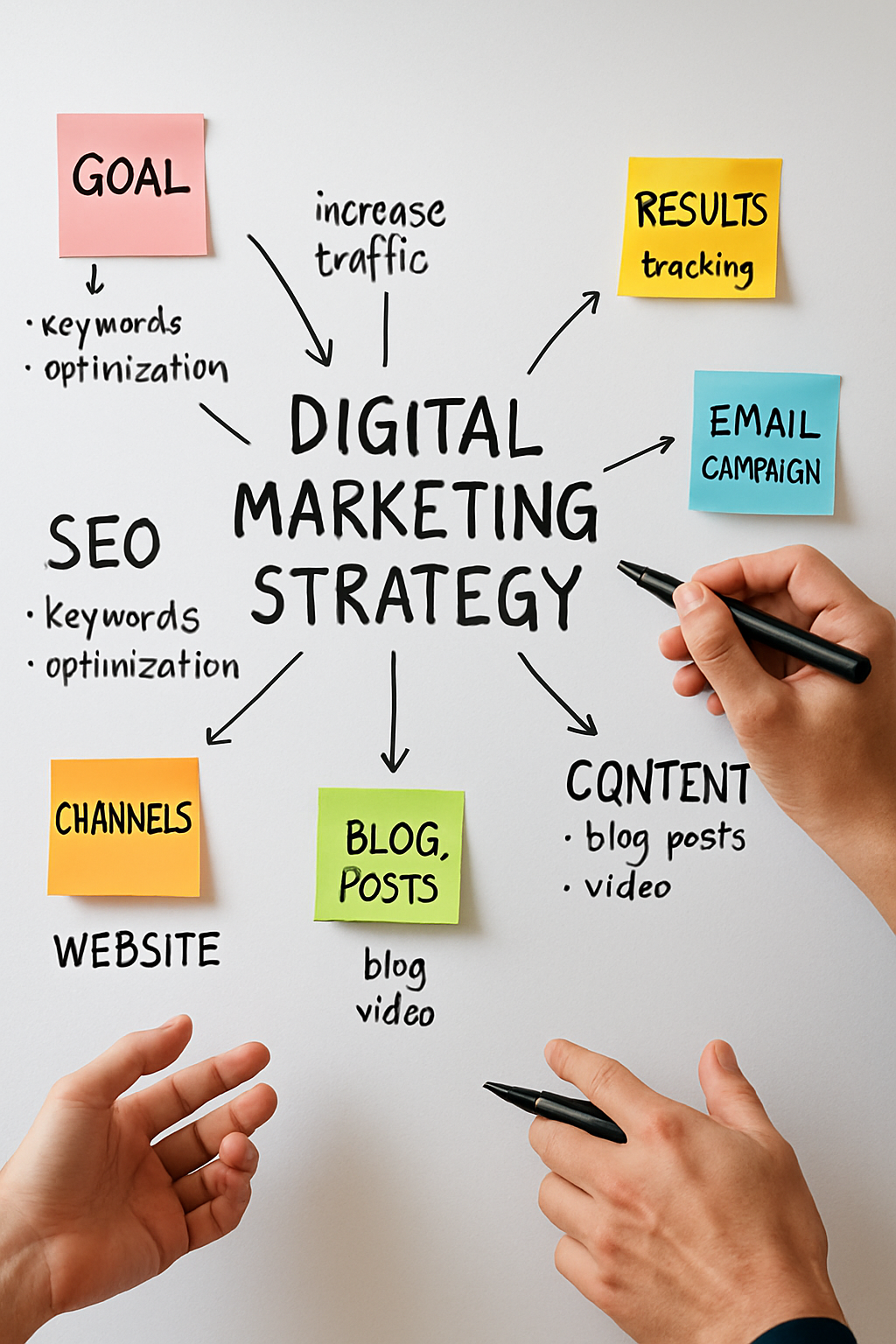
How to Build a Digital Marketing Strategy That Works
Developing a digital marketing strategy requires thoughtful planning. Use these steps as a roadmap:
-
Set clear goals and KPIs: Identify what success looks like. Do you want more website traffic, qualified leads or online sales? Set measurable targets (e.g., increase organic traffic by 30 % in six months).
-
Research your audience: Understand who your ideal customers are. Consider demographics (age, location, income), interests and pain points. Survey existing customers or analyse website analytics to gain insights.
-
Audit your existing presence: Evaluate your website, social profiles and analytics. Identify strengths, weaknesses and gaps. For example, you might discover that most visitors drop off after reading one page.
-
Choose the right channels: Based on your goals and audience, select the most effective platforms—SEO for long‑term visibility, PPC for immediate leads, social media for engagement and content marketing for education.
-
Create a content plan: Outline topics aligned with audience interests and stages of the buyer’s journey. Plan a mix of blog posts, guides, videos and social posts. For local relevance, highlight Oakville events and landmarks.
-
Allocate your budget: Decide how much to invest in each channel. Factor in costs for ad spend, tools, creative development and agency fees.
-
Set up tracking: Install analytics tools (like Google Analytics and Google Tag Manager) to monitor website traffic, conversions and user behaviour. Consider call‑tracking software to link phone inquiries back to digital campaigns.
-
Implement and optimise: Launch campaigns and monitor results. Analyse metrics regularly (weekly or monthly) to identify patterns. Adjust bids, keywords or creative elements based on performance.
-
Test and iterate: Use A/B testing to compare headlines, landing pages or ad creatives. The KEY27 property management case study demonstrates how a new homepage design tripled the conversion rate. Use similar testing to refine your own campaigns.
-
Review and scale: At periodic intervals (quarterly or annually), evaluate overall progress and ROI. Scale up investments in channels delivering the highest returns and retire underperforming tactics.
This systematic approach ensures your strategy is aligned with your business objectives and responsive to market changes.
Social Media, PPC and SEO: How to Prioritize Your Efforts
Deciding where to invest time and money can be tricky. Here’s how to prioritise among social media, PPC and SEO:
Consider your goals and timeline
– Immediate results: PPC and paid social deliver quick visibility and can be ideal for short‑term promotions. For example, promoting a seasonal sale with a Facebook or Google Ad ensures your offer appears to the right audience instantly.
– Long‑term sustainability: SEO builds gradual authority and organic traffic. It takes time—often months—to see results but yields a steady stream of visitors with minimal ongoing cost. Content marketing complements SEO by attracting people searching for answers.
– Brand engagement: Social media fosters two‑way communication, building relationships and trust. It’s also effective for customer service and community engagement.
Assess your resources
– Budget: If funds are limited, start with SEO and content marketing for a cost‑effective long‑term strategy. Small budgets can still produce results through optimized webpages and targeted blog posts. Paid ads can be layered on as revenue grows.
– Team capabilities: If you have an in‑house creative team, focus on social media and video content. If your team excels in data analysis, invest in PPC where optimisation and analytics drive success.
Leverage data
Analyse historical performance to see which channels bring in leads. In the KEY27 auto service case study, SEO, PPC, content development and social media management were combined to improve both the quality and quantity of website traffic. By tracking metrics like cost per lead and conversion rate, you can determine which channel deserves more attention.
Integrate channels for synergy
Your marketing channels should support each other. For example:
-
SEO + Content: Blog posts optimised for local keywords build organic traffic.
-
SEO + PPC: Use PPC to test which keywords convert, then invest in SEO for those terms.
-
Social + PPC: Amplify high‑performing social posts with paid boosts to reach new audiences, according to amu.apus.edu.
-
Social + Content: Share your blog posts on social platforms to drive traffic and engage followers.
Common Digital Marketing Mistakes (And How to Avoid Them)
Even experienced business owners can make missteps. Here are common errors and how to fix them:
1. Ignoring data and analytics
Failing to track metrics means you’re guessing rather than making informed decisions. Report Garden notes that 76 % of organisations use marketing analytics to inform decision‑making as reported by reportgarden.com. Without analytics, you won’t know which campaigns drive traffic, leads or sales. How to fix: Set up conversion tracking in Google Analytics, use dashboards to monitor key performance indicators (KPIs) and adjust campaigns based on data.
2. Not defining target audiences
Generic messaging attracts no one. Digital marketing allows precise targeting based on demographics, interests and behaviours. How to fix: Create buyer personas representing your ideal customers in Oakville—such as busy parents, young professionals or retirees—and tailor your content accordingly.
3. Neglecting mobile optimisation
A large portion of traffic comes from mobile devices. Websites that load slowly or display poorly on phones cause users to bounce. Ensure your site is responsive and loads quickly. Tools like Google’s PageSpeed Insights can highlight issues.
4. Focusing only on traffic, not conversions
High traffic numbers can be deceptive if visitors aren’t converting. The KEY27 property management client experienced plenty of visitors but few leads until a conversion optimisation audit tripled the conversion rate. How to fix: Focus on conversion rate optimization (CRO) by simplifying forms, improving calls to action and testing different layouts.
5. Using social media without a strategy
Posting randomly without a plan leads to inconsistent messaging. AMU recommends concise posts (40–80 characters) and short videos (under 20 seconds). How to fix: Develop a content calendar, align posts with business goals and measure engagement to refine your approach.
6. Overspending on ads without tracking
Without proper tracking, ad spend can spiral. Cost per acquisition (CPA) for Google Ads averages $48.96 on the search network and $75.51 on the display network. To ensure ROI, track conversions and adjust bids accordingly.
7. Not integrating offline and online efforts
Your online efforts should complement offline marketing—like in‑store promotions or networking events—so customers receive consistent messaging. Consider using QR codes on business cards or flyers to direct offline audiences to your website or social channels.

How to Measure the ROI of Your Digital Marketing Campaigns
Understanding ROI
Return on investment (ROI) assesses the profitability of marketing activities by comparing revenue with costs. Techfunnel explains ROI as (Revenue from campaign – Cost of campaign) ÷ Cost of campaign × 100. For example, spending $2 000 on a social media campaign that generates $10 000 in sales yields an ROI of 400 %.
Why measuring ROI matters
Measuring ROI helps you:
-
Evaluate performance: Understand which campaigns and channels are most effective.
-
Allocate budget: Focus spending on high‑ROI activities and reduce waste.
-
Justify marketing spend: Provide concrete numbers to stakeholders.
-
Drive continuous improvement: Identify opportunities to optimise and scale.
Key metrics to track
Techfunnel and Report Garden recommend monitoring these metrics to evaluate ROI:
-
Cost per Lead (CPL): Average cost to acquire a new lead, according to techfunnel.com.
-
Cost per Acquisition (CPA): Cost to acquire a paying customer. Average CPA for Google Ads is $48.96 for search and $75.51 for display, says reportgarden.com.
-
Click‑through Rate (CTR): Percentage of people who click on your ad. The average CTR for Google Ads is 3.17 % on search and 0.46 % on display.
-
Conversion Rate: Percentage of visitors who complete a desired action (purchase, sign‑up). Unbounce data cited by Report Garden shows a typical landing page conversion rate of 9.7 %.
-
Return on Ad Spend (ROAS): Revenue generated for each dollar spent. Digital ads yield a 300 % higher ROAS than traditional media. (Source: reportgarden.com).
-
Customer Lifetime Value (CLV): Total revenue a customer brings over their relationship with your business (Source techfunnel.com).
-
Average Order Value (AOV): Average amount spent per transaction.
Steps to calculate ROI
-
Define your goals: Set clear objectives (leads, sales, brand awareness)
-
Track relevant metrics: Use tools like Google Analytics, HubSpot or Hootsuite to monitor KPIs
-
Calculate total costs: Include ad spend, production, software and labour
-
Measure revenue generated: Track sales or conversions attributable to each campaign
-
Apply the ROI formula: (Revenue – Cost) ÷ Cost × 100
-
Interpret results: A positive ROI means the campaign generated more revenue than it cost, while a negative ROI indicates losses
Tools for tracking ROI
Several tools can simplify ROI tracking:
-
Google Analytics: Tracks website visits, conversions and traffic sources.
-
HubSpot: Offers all‑in‑one marketing analytics with lead and customer tracking
-
Hootsuite: Monitors social media performance and ROI across platforms.
-
SEM Rush & Moz: Provide keyword rankings and competitor insights to measure SEO impact.
Working with a Local Oakville Marketing Agency: What to Expect
Benefits of hiring a local agency
Working with a local digital marketing agency offers unique advantages:
-
Local knowledge: A team based in Oakville understands the community, local events and customer behaviours. They can tailor messaging that resonates with residents.
-
Face‑to‑face collaboration: It’s easier to build trust and communicate goals when you can meet in person.
-
Quick response: Local agencies can respond promptly to market changes, seasonal trends or crises.
-
Support the local economy: Investing in local businesses helps strengthen the Halton Region.
What services to expect
The KEY27 case studies illustrate the breadth of services a comprehensive agency provides:
-
SEO and Local Search Optimisation: KEY27 helped an auto service client improve the quality and quantity of website traffic through SEO.
-
Paid Advertising (PPC): They set up and managed pay‑per‑click campaigns.
-
Content Development and Social Media Management: Creating relevant blog posts and managing social platforms improved engagement.
-
Website Maintenance and Conversion Optimisation: Fixing bugs, running system upgrades and conducting A/B tests increased conversion rates.
-
Advanced Link Building: Building high‑quality backlinks improved domain authority and search rankings.
How to evaluate and choose a partner
When comparing digital marketing providers in Oakville, consider the following:
-
Experience and Expertise: Ask about the agency’s history and review their case studies. Look for demonstrated results in industries similar to yours.
-
Services Offered: Ensure they provide the specific services you need (SEO, PPC, content, social media). Look for comprehensive packages if you want an integrated approach.
-
Transparency and Communication: A good agency provides regular reports, explains metrics clearly and involves you in decision‑making.
-
Local Reputation: Read reviews and testimonials. Ask other Oakville business owners about their experiences.
-
Pricing Structure: Compare pricing packages. Choose an agency that aligns with your budget without compromising quality.
Remember, a strong partnership depends on trust and clear communication. A local agency should treat your success as their success.
Frequently Asked Questions (FAQs)
How do I know if my digital marketing is working?
Monitor key metrics like website traffic, click‑through rate, conversion rate, cost per lead and ROI. Tools such as Google Analytics, HubSpot and Hootsuite help track performance. A positive ROI means your campaigns generate more revenue than they cost. If your metrics improve over time (e.g., higher conversion rates, lower cost per acquisition), your marketing efforts are working.
What are the best digital marketing channels for small businesses?
Small businesses in Oakville should prioritise:
Ensure your business appears in local search results and on Google Maps
Content Marketing: Publish helpful articles and guides relevant to your audience.
Social Media: Engage with customers on platforms where they spend time; organic posts and targeted ads can yield quick results.
Email Marketing: Maintain relationships with existing customers and encourage repeat business
PPC: Use paid ads for quick visibility, particularly for time‑sensitive offers.
How much should I invest in digital marketing?
Budget depends on your goals, industry and revenue. As a rule of thumb, businesses often allocate 7–10 % of revenueu to marketing, with a majority dedicated to digital channels. Start small, test campaigns and scale up investments that yield positive returns. Use ROI calculations to guide your spending.
Can digital marketing really help small businesses grow faster?
Yes. Digital marketing levels the playing field by allowing small businesses to compete with larger brands. Precise targeting, cost‑effective channels and measurable results enable even modest budgets to achieve significant impact. The KEY27 case studies show that combining SEO, PPC, content and conversion optimisation can triple conversion rates for small businesses. When implemented strategically, digital marketing accelerates growth by attracting more qualified leads and converting them into loyal customers.


